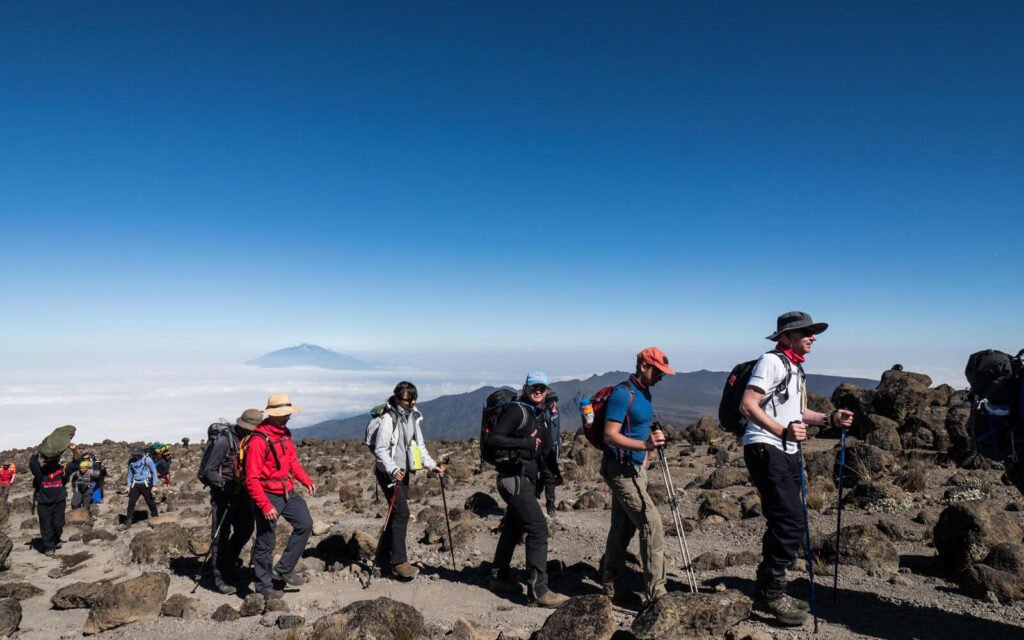
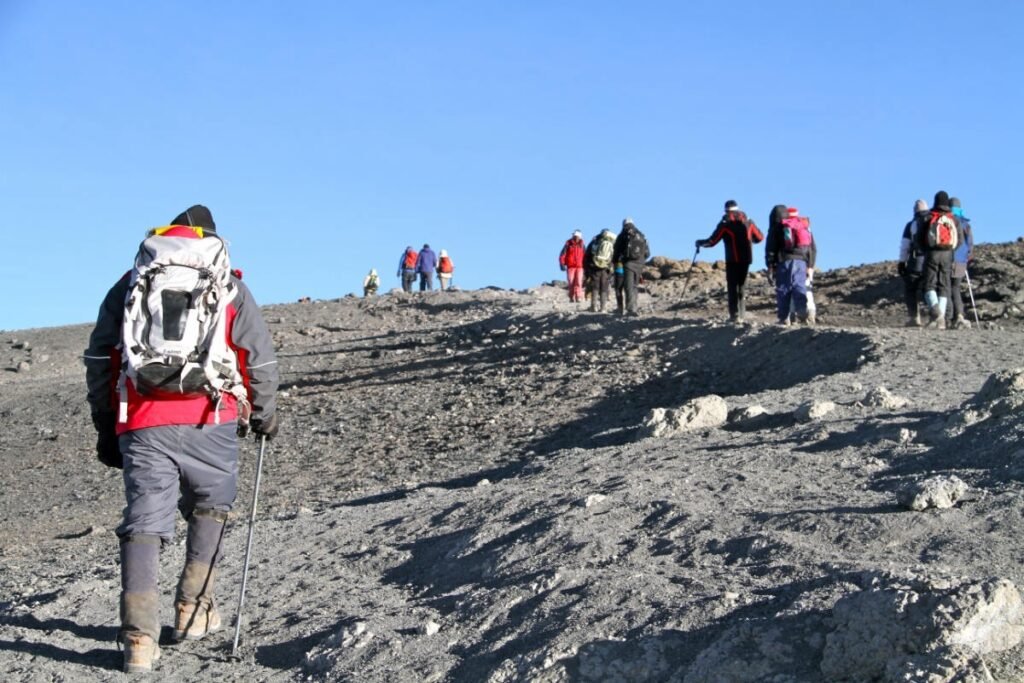
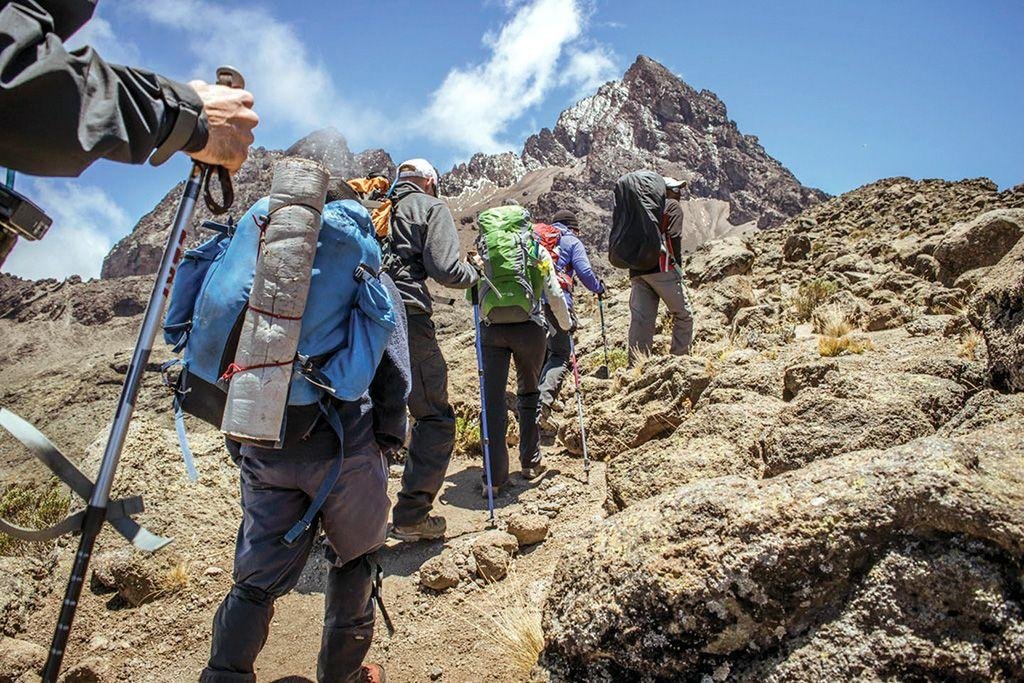
Your Safety Comes First
Mount Kilimanjaro does not require technical mountaineering skills on most standard routes, but reaching 5,895 metres (19,341 feet) is a serious high-altitude undertaking.
The main challenge is not technical climbing—it is altitude and the body’s ability to acclimatize. Conditions can change quickly, and every climber responds differently to high altitude.
For this reason, safety and responsible decision-making are central to every EATL Tour Kilimanjaro climb.
Experienced Mountain Guides
Your mountain guides play an essential role in keeping you safe. They monitor your progress throughout the trek, assess how you are responding to the altitude and advise you when changes to the itinerary may be necessary.
We encourage every climber to communicate openly with their guide about how they are feeling. Headaches, nausea, unusual tiredness, dizziness, shortness of breath or other symptoms should never be ignored.
If a guide believes that continuing the ascent could put a climber at risk, the priority is to stop, descend or seek appropriate medical assistance.
Acclimatization Is Important
There is no reliable way to predict exactly how an individual will respond to altitude.
A slower ascent and a well-planned itinerary give your body more time to adjust to the decreasing oxygen availability at higher elevations.
Our specialists can help you select a route and itinerary that provides an appropriate acclimatization profile for your climb.
Altitude Sickness
Acute Mountain Sickness (AMS) can affect climbers at altitude. Possible symptoms include:
- Headache
- Nausea
- Loss of appetite
- Dizziness
- Fatigue
- Difficulty sleeping
More serious altitude-related conditions can occur and require immediate attention.
If you experience unusual or worsening symptoms, tell your guide immediately. Do not attempt to hide symptoms simply because you want to reach the summit.
Can I Take Diamox?
Diamox (acetazolamide) is a prescription medication that is sometimes used to help prevent or reduce the risk of altitude sickness.
Whether it is appropriate for you depends on your individual circumstances. Speak with a qualified medical professional before your climb about altitude medication, dosage, possible side effects and whether it is suitable for you.
Your mountain guide is not a substitute for medical advice and should not be the person making decisions about prescription medication.
Health Information Before Your Climb
Before travelling to Kilimanjaro, discuss your planned trek with your doctor if you have any medical conditions, take medication regularly or have concerns about exercising at high altitude.
Please provide your mountain team with relevant information that could affect your safety during the trek.
Being open with your guide allows the team to respond appropriately if a problem develops.
First Aid & Emergency Response
Our mountain teams carry appropriate first-aid equipment for common trekking situations.
If a climber becomes seriously unwell or cannot safely continue, the guide will assess the situation and arrange the appropriate response, which may include descent from the mountain and referral for medical assistance.
Emergency procedures can vary according to the location, weather and severity of the situation.
Emergency Oxygen
Emergency oxygen may be used as part of an emergency response when appropriate. Oxygen is not a substitute for descending to a safer altitude when serious altitude illness is suspected.
Your guide will determine the appropriate immediate response based on the circumstances and available emergency procedures.
Evacuation
If a climber needs to leave the mountain because of illness, injury or another emergency, the mountain team will coordinate an appropriate descent or evacuation procedure.
The exact evacuation method depends on the location, weather, accessibility and severity of the situation.
We also recommend that every climber has appropriate travel and evacuation insurance before beginning their trek.
Trekking at Your Own Pace
Kilimanjaro is not a race.
Our guides encourage a steady pace that allows climbers to conserve energy and adapt to the altitude. Taking breaks, eating regularly and drinking enough water are important parts of the trek.
If you are slower than other members of your group, there is no need to feel pressured to keep up. Your guide will help manage the pace of the group safely.
Reaching the Summit Is Not the Only Goal
A successful Kilimanjaro climb is not simply about standing on the summit.
Your safety comes first.
If weather conditions, altitude symptoms, illness or another safety concern makes continuing inappropriate, your guide may recommend stopping the ascent or descending.
The mountain will always be there for another attempt.
Prepare Properly. Trek Responsibly. Climb Safely.
With the right preparation, appropriate equipment, a suitable itinerary and an experienced mountain team, you can approach your Kilimanjaro adventure with confidence.
Talk to an EATL Tour Kilimanjaro specialist about choosing a route, preparing for altitude and planning your climb safely.