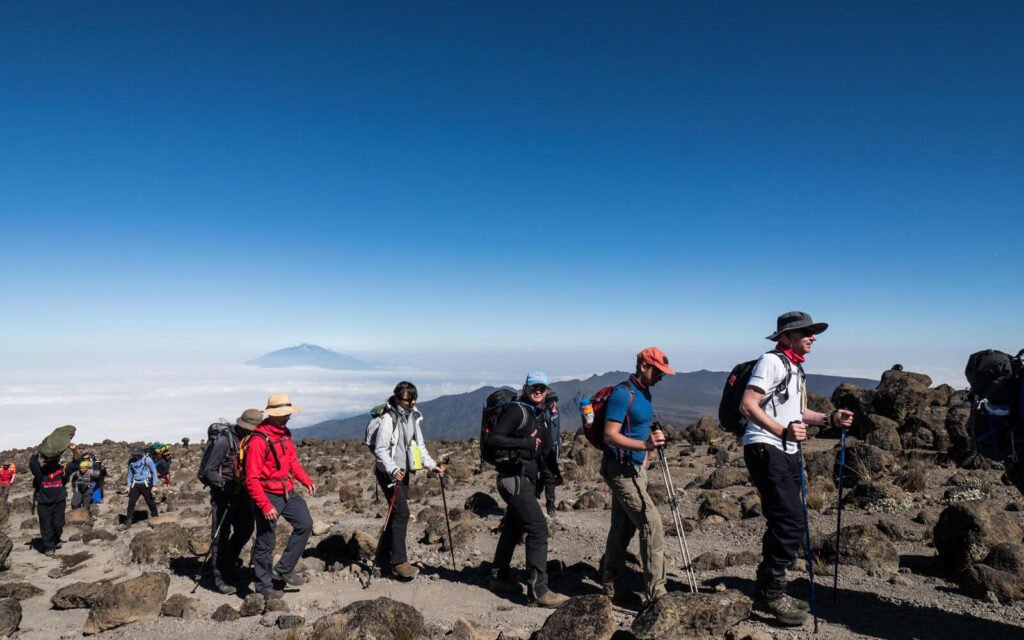
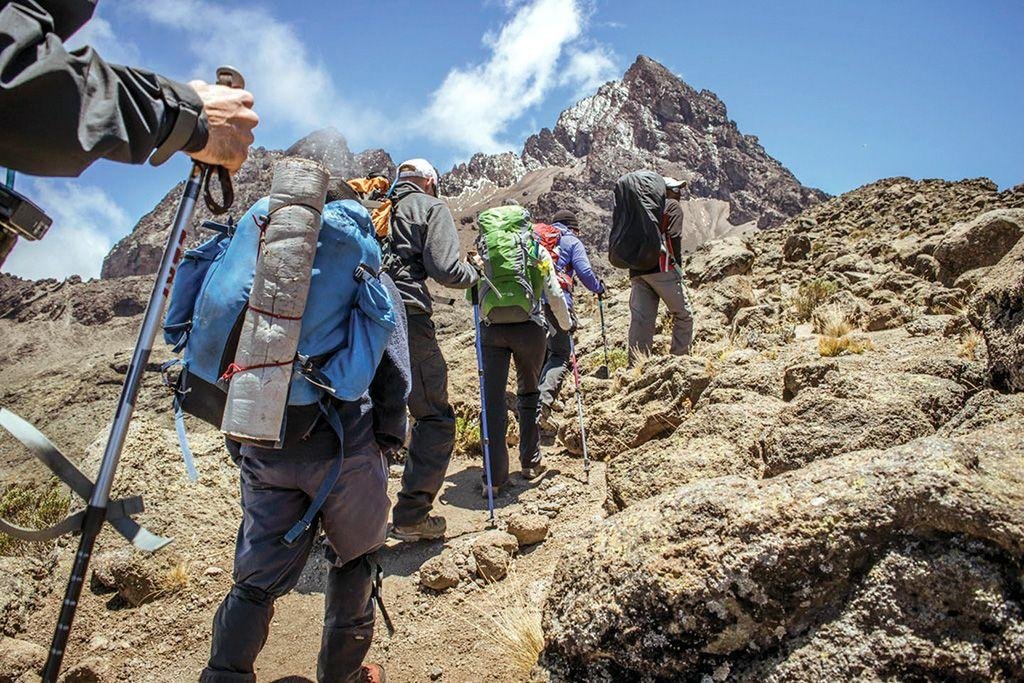
Packing correctly can make a major difference to your comfort on Mount Kilimanjaro. Temperatures can vary considerably between the lower slopes and the summit, so you need clothing that allows you to adapt to changing weather and altitude.
Before your climb, your EATL Tour specialist can help you review your equipment and identify anything you may still need.
Essential Equipment
- Sleeping bag – suitable for cold mountain temperatures
- Trekking poles – collapsible poles are recommended
- Headlamp – with spare batteries
- Duffel bag – for equipment carried by the porter team
- Daypack – for personal items you need during the day’s trek
- Water bottles and/or hydration bladder – sufficient capacity for your daily water needs
- Waterproof backpack cover
- Dry bags or waterproof packing bags – useful for protecting clothing and electronics
Clothing
The best approach is to dress in layers so you can add or remove clothing as temperatures change.
Base Layers
- Long-sleeve moisture-wicking shirts
- Short-sleeve moisture-wicking shirts
- Long thermal underwear
- Moisture-wicking underwear
- Sports bras where applicable
Mid Layers
- Fleece or soft-shell jacket
- Warm fleece or trekking trousers
- Comfortable hiking trousers
- Optional lightweight shorts for warmer lower elevations
Outer Layers
- Waterproof and breathable jacket with hood
- Waterproof trekking trousers
- Warm insulated jacket, preferably suitable for very cold summit conditions
Headwear
- Sun hat or brimmed hat
- Warm knitted hat or beanie
- Buff, neck gaiter or scarf
- Balaclava for particularly cold conditions
Gloves
- Lightweight liner gloves
- Warm insulated gloves or mittens
- Waterproof outer gloves are useful in wet or snowy conditions
Footwear
- Comfortable, broken-in hiking boots
- Warm trekking socks
- Spare socks
- Comfortable shoes for wearing around camp
- Waterproof gaiters
Avoid wearing brand-new hiking boots on the mountain. Break them in before your trek to reduce the risk of blisters.
Sun & Weather Protection
The sun can be strong at altitude, so protection is important.
Pack:
- Sunglasses with good UV protection
- Sunscreen
- SPF lip balm
- Lightweight rain protection
- Small towel
- Insect repellent for lower elevations
Personal Items & Toiletries
- Toothbrush and toothpaste
- Biodegradable or suitable toiletries
- Hand sanitizer
- Wet wipes
- Toilet paper
- Personal medications
- Small personal first-aid supplies
- Prescription medication
- Personal hygiene products
- Small quick-dry towel
If you take prescription medication, bring enough for the entire trip and keep it in its original packaging.
Snacks & Energy
Although meals are provided during the trek, many climbers like to carry small personal snacks for the trail.
Consider:
- Energy bars
- Nuts
- Dried fruit
- Chocolate
- Sweets
- Electrolyte tablets or powder
- Other lightweight high-energy snacks you enjoy
Choose foods that you know you can comfortably eat during physical activity.
Electronics
- Mobile phone
- Camera
- Power bank
- Spare batteries
- Charging cables
- Headlamp batteries
There may be limited or no reliable electricity on some mountain routes, so a sufficiently charged power bank is recommended.
Keep batteries and electronic devices protected from very cold temperatures, particularly during the summit night.
Documents & Important Information
Keep your important travel documents secure. These may include:
- Passport
- Visa documentation where applicable
- Travel insurance details
- Emergency contact information
- Flight information
- Copies of important documents
You generally won’t need to carry all of your travel documents during the daily trek.
What Not to Bring
Try to keep your mountain luggage as light as practical.
Avoid unnecessary:
- Heavy clothing that can be replaced with effective layers
- Large toiletries
- Excess electronics
- Bulky luggage
- Items you will not use during the trek
Your mountain specialist can advise you about luggage limits and what can remain securely stored while you climb.
Equipment EATL Tour Provides
The equipment and services included in your Kilimanjaro package depend on your chosen route and itinerary.
Your EATL Tour specialist will confirm exactly what is provided before departure. Depending on your package, this may include:
- Mountain tents
- Sleeping mattresses
- Dining equipment
- Cooking equipment
- Camping equipment
- Meals
- Drinking-water arrangements
- Mountain crew support
- First-aid equipment
Before You Leave for the Mountain
We recommend completing your packing before arriving for your climb so there is enough time to identify anything missing.
Your pre-climb briefing is also a good opportunity to review your equipment with the mountain team and ask questions about clothing, weather, luggage and the route.
Download or Save This Checklist
| Clothing | Layers | ✓ |
| Footwear | Broken-in hiking boots | ✓ |
| Weather | Waterproof jacket and trousers | ✓ |
| Warmth | Insulated jacket, gloves and warm hat | ✓ |
| Water | Bottles/hydration system | ✓ |
| Lighting | Headlamp + spare batteries | ✓ |
| Sun | Sunglasses + sunscreen | ✓ |
| Personal | Medication + toiletries | ✓ |
| Energy | Lightweight snacks | ✓ |
| Electronics | Phone + power bank | ✓ |
| Documents | Passport + insurance details | ✓ |
Pack Smart. Trek Comfortably.
You don’t need to bring everything you own to Kilimanjaro. The goal is to pack light, warm, dry and practical.
Speak with an EATL Tour Kilimanjaro specialist before your climb for route-specific packing advice and confirmation of what is included in your package.