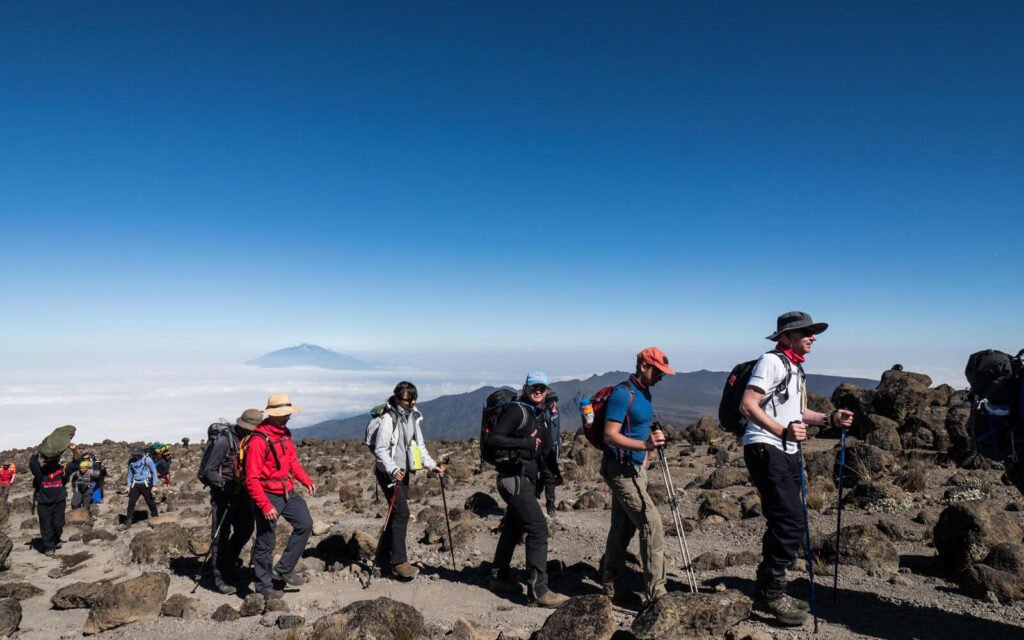
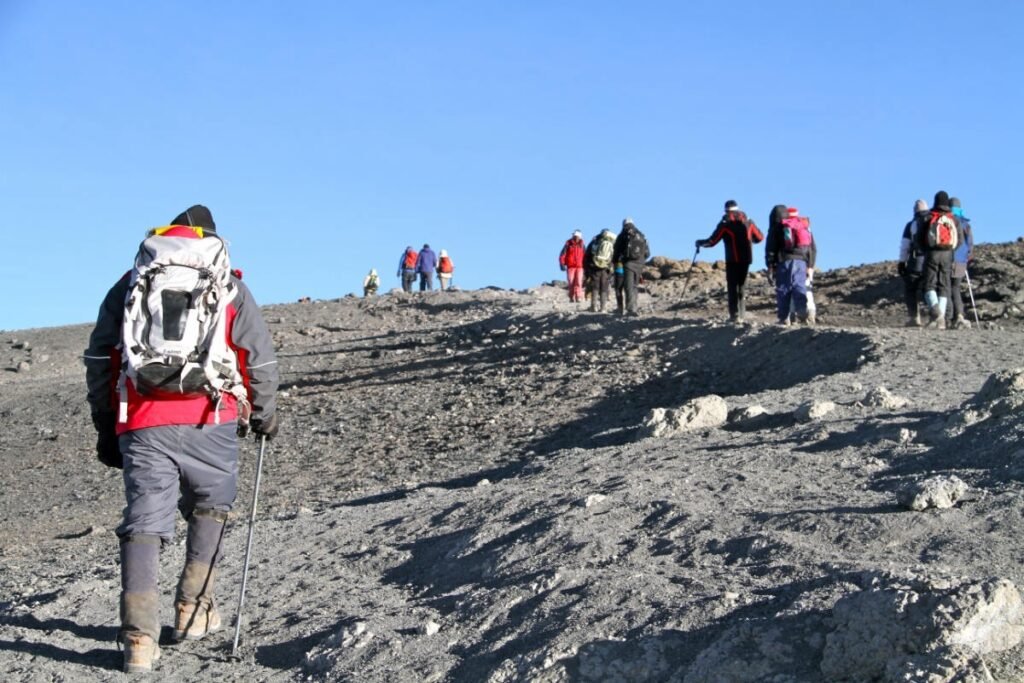
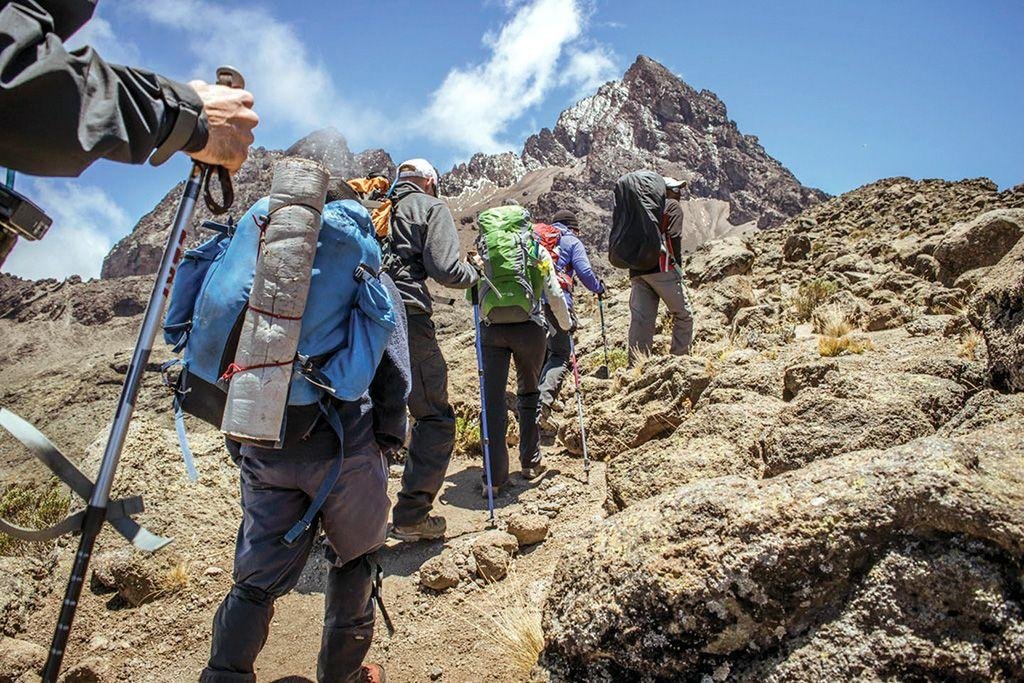
Climbing Mount Kilimanjaro is a physical challenge, but you do not need to be an elite athlete to prepare for it.
You will spend several hours walking on most trekking days, often on uneven and steep terrain. The key is to arrive with enough endurance, leg strength and confidence to keep moving comfortably for extended periods.
Start Walking Before Your Trek
One of the simplest ways to prepare is to walk regularly in the months leading up to your climb.
Gradually increase the distance and duration of your walks. If possible, include hills, stairs or uneven terrain so your legs and joints become accustomed to changes in elevation.
A good training routine can include:
- Long-distance walking
- Hiking
- Hill walking
- Stair climbing
- Cycling
- Light strength training
- Exercises for your legs and core
Consistency is more important than trying to complete extremely difficult workouts shortly before your departure.
Train for Long Days on Your Feet
Kilimanjaro involves repeated days of walking rather than one short, intense workout.
As your trek approaches, try to become comfortable with spending several hours on your feet. Weekend hikes can be particularly useful because they allow you to practise walking for longer periods while carrying a daypack.
You should also use your training hikes to test your:
- Hiking shoes
- Socks
- Daypack
- Walking poles
- Clothing layers
- Water bottles or hydration system
This helps you identify uncomfortable equipment before you reach the mountain.
You Don’t Need to Walk Fast
Kilimanjaro is not a speed competition.
Mountain guides generally encourage a slow, steady pace that helps conserve energy and gives your body more time to adjust to altitude.
Being comfortable walking slowly for several hours is more useful than being able to run a short distance quickly.
Altitude Is Different From Fitness
Being physically fit does not guarantee that you will acclimatize well to high altitude.
Altitude affects people differently, and even very fit and experienced athletes can experience altitude-related problems.
This is why choosing an itinerary with appropriate acclimatization and following your guide’s advice are important parts of your preparation.
Can I Train for Altitude at Home?
If you live near mountains or hills, hiking at elevation can give you useful experience.
However, there is no simple fitness exercise that can completely reproduce the effects of climbing to 5,895 metres.
For this reason, acclimatization during the actual trek is extremely important.
Choosing a route with a suitable number of days and allowing your body enough time to adjust can be more important than simply increasing your fitness level.
Arrive Before Your Climb
We recommend arriving in Tanzania before your scheduled Kilimanjaro departure rather than beginning the climb immediately after a long international flight.
This gives you time to rest, complete your equipment check and attend your pre-climb briefing.
Depending on your itinerary, you can also use the time before your climb to explore the Kilimanjaro area or take part in a suitable cultural or walking experience.
Consider a Pre-Climb Hiking Experience
If you have extra time before your trek, EATL Tour can help arrange activities around Kilimanjaro that allow you to experience the local landscape and get some gentle walking in before your climb.
A Materuni Coffee & Waterfalls experience, for example, combines cultural experiences with walking through the foothills of Kilimanjaro.
For travelers with more time and appropriate preparation, Mount Meru can also be considered as a separate trekking experience before Kilimanjaro.
Don’t Forget Mental Preparation
Kilimanjaro is not only a physical challenge.
Long trekking days, cold temperatures, changing weather and altitude can test your patience and determination. Being prepared to walk at a slow pace, take breaks and follow your guide’s instructions can make the experience more manageable.
A Simple Preparation Checklist
Before your climb, aim to:
- Walk regularly
- Build up your hiking distance gradually
- Include hills or stairs when possible
- Strengthen your legs and core
- Practise with your hiking boots and daypack
- Stay well hydrated
- Get adequate rest before the trek
- Arrive in Tanzania with enough time to prepare
- Choose an itinerary that allows appropriate acclimatization
- Discuss any health concerns with a qualified medical professional before travelling
Prepare Well. Climb at Your Pace.
You don’t have to be an elite athlete to climb Kilimanjaro. Good preparation, the right equipment, a suitable itinerary and a steady approach can help you enjoy the journey from the foothills to the summit.
Talk to an EATL Tour Kilimanjaro specialist about choosing a route and preparing for your trek.